
vanity makeup mirror
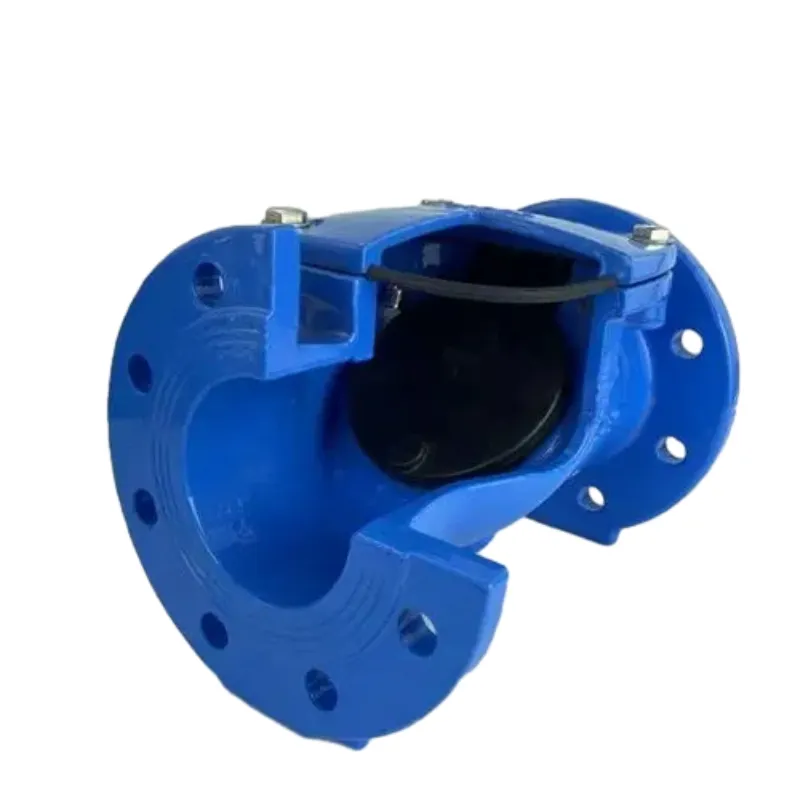
Safety Check Valves Ensuring Fluid System Integrity In a world where fluid dynamics play a crucial role across various industries, the importance of safety mechanisms such as check valves cannot be overstated. Specifically, safety check valves are integral components designed to prevent the backflow of fluids, ensuring operational safety and equipment integrity in complex systems such as water treatment facilities, chemical processing plants, and oil refineries. What is a Safety Check Valve? A safety check valve is a type of one-way valve that allows fluids to flow in a single direction while preventing backflow. This function is critical in avoiding contamination and ensuring that pressures within a system are maintained at safe levels. The design typically incorporates a spring-loaded mechanism or a gravity-operated disc that returns to a closed position when the flow direction is reversed. The Importance of Safety Check Valves 1. Protection Against Backflow Backflow can lead to significant operational failures, contamination of supply lines, and even catastrophic accidents in severe cases. Safety check valves are crucial in protecting tanks, pipes, pumps, and other equipment from the adverse effects of backflow. 2. System Integrity Maintaining system integrity is paramount in any operation that involves fluid management. The failure of a single component can lead to extensive damage and costly downtime. By installing safety check valves, operators can ensure that critical systems remain intact and function correctly, thereby minimizing risks. 3. Preventing Contamination In many industries, especially healthcare and food processing, contamination can lead to severe consequences, including health risks and financial loss. Safety check valves ensure that fluids can’t flow backward into a clean supply, thus removing the risk of contamination. 4. Pressure Management Safety check valves assist in regulating pressure within a system. A backflow can lead to an increase in pressure that the system may not be designed to handle, risking equipment damage. The check valve provides a fail-safe that helps manage these pressure fluctuations. Applications of Safety Check Valves Safety check valves are widely utilized across various industries safety check valve - Water and Wastewater Treatment In these facilities, check valves help control the flow of treated water and prevent contamination from sewage systems. - Oil and Gas The oil and gas industry depends heavily on check valves to maintain manageable and safe fluid dynamics in pipelines, avoiding leaks and spills that can lead to environmental disasters. - Chemical Processing These valves are essential in preventing unwanted reactions in chemical plants by ensuring that hazardous materials do not backflow into clean sections of the process. - Power Generation In power plants, safety check valves ensure that steam and cooling fluids do not flow backward, which could disrupt the entire energy generation process. Types of Safety Check Valves Several types of safety check valves are commonly used, each designed for specific applications and fluid types. - Swing Check Valves These have a swinging disc that opens and closes based on the flow direction. They are typically used in larger pipe systems. - Lift Check Valves These operate similarly to swing valves but feature a disc that moves up and down with the flow pressure, making them suitable for higher fluid velocities. - Ball Check Valves These use a ball that moves within the valve body to allow flow in one direction while sealing the other. They are often used in smaller pipe systems and when space is limited. Conclusion In summary, safety check valves serve as vital components in various fluid systems, significantly enhancing safety, efficiency, and reliability. By preventing backflow, managing pressure, and ensuring system integrity, these valves play an essential role in protecting both equipment and the environment. As industries continue to innovate and demand rigorous safety standards, the role of safety check valves will only become more critical, emphasizing the need for proper maintenance and selection in all fluid management applications. Investing in quality safety check valves is not just a regulatory requirement; it is a commitment to operational excellence and safety in engineering practices.
about
vanity makeup mirror
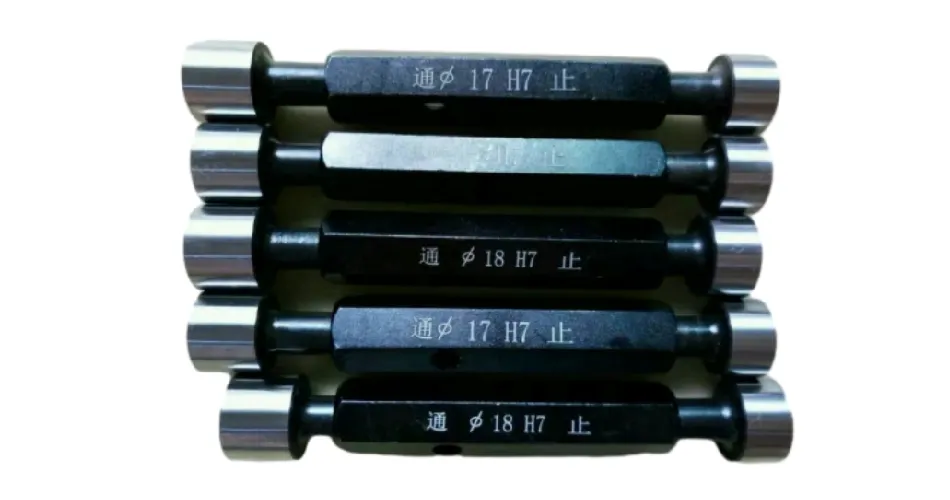
Understanding Plug Ring Gauges Precision Tools for Quality Assurance In the world of manufacturing and machining, precision is paramount. Ensuring that components fit together with accuracy requires reliable measuring tools. One such tool that plays a vital role in verifying the dimensional correctness of internal features is the plug ring gauge. This article delves into the intricacies of plug ring gauges, their uses, importance, and how they contribute to quality assurance in various industries. What is a Plug Ring Gauge? A plug ring gauge is a cylindrical instrument designed to measure the diameter of holes, especially those that require high precision. The gauge consists of a plug with specific dimensions that can be inserted into holes of varying sizes. It is typically made from stable materials such as steel or carbide to withstand wear and maintain accuracy over time. The design comprises the 'go' and 'no-go' sections, allowing users to quickly determine whether a hole meets the required specifications. The 'go' side of the gauge should fit snugly into the hole, confirming that it is within tolerances. Conversely, the 'no-go' side is slightly larger, and if it fits, it indicates that the hole is oversized and does not meet the specified limits. This simple yet effective design allows for quick and reliable inspection, crucial for maintaining quality standards. Importance of Plug Ring Gauges The significance of plug ring gauges extends across various industries, including automotive, aerospace, and machinery . Here are some reasons why they are essential 1. Quality Control Plug ring gauges play a pivotal role in quality assurance processes. By ensuring that drilled or machined holes meet specific standards, manufacturers can prevent costly errors that arise from fitting issues. 2. Consistency Regular use of plug ring gauges helps maintain consistency across production runs. By standardizing measurements, manufacturers can ensure uniformity in product dimensions, which is critical, especially for components that must work together. plug ring gauge 3. Cost Efficiency Detecting dimensional discrepancies early in the manufacturing process helps reduce waste and rework. Plug ring gauges enable operators to quickly identify out-of-spec parts, minimizing the need for costly corrections down the line. 4. Simplicity and Speed Unlike complex electronic measuring devices, plug ring gauges provide rapid results that can be easily interpreted. Their straightforward design makes them user-friendly, allowing operators to perform checks without extensive training. Applications in Various Industries Plug ring gauges are utilized in a wide range of applications. In the automotive industry, for instance, these gauges ensure that engine components fit and function correctly. They verify the integrity of holes in engine blocks, allowing for precise assembly of various parts such as pistons and crankshafts. In aerospace, dimensional precision is even more critical due to the safety implications of component failure. Plug ring gauges are used to inspect the integrity of holes in various structural elements, ensuring they meet the stringent requirements necessary for flight safety. Machinery manufacturing also benefits from plug ring gauges, as they aid in maintaining the tolerances required for intricate pieces and assemblies. Whether it's for hydraulic systems or complex gear assemblies, ensuring proper fit and functionality is paramount. Conclusion In conclusion, plug ring gauges are indispensable tools in the arsenal of quality assurance mechanisms employed across numerous industries. Their ability to provide rapid and reliable measurements makes them essential for maintaining precision in manufacturing processes. As industries continue to evolve and demand higher levels of accuracy, the role of plug ring gauges will undoubtedly remain significant. Investing in high-quality gauges and training personnel to use them effectively can lead to improved product quality, reduced waste, and ultimately, a more profitable operation. The precise measurement capabilities of plug ring gauges ensure that businesses can meet customer requirements and uphold their reputations for quality in an increasingly competitive market.
-

High quality industrial productsagement

High quality industrial products
View Details -

Meet the diverse needs of customers

Meet the diverse needs of customers
View Details -

Strict quality control

Strict quality control
View Details -

Top raw materials

Top raw materials
View Details -

Trusted supplier

Trusted supplier
View Details
Our application


news and information
Wear Resistance Strategies for Trapezoidal Threads
Trapezoidal threads are a cornerstone of mechanical systems requiring precise linear motion and load

Water Meter Shutoff Valve Installation and Maintenance Guide
Understanding Water Meter Shut-Off Valves Importance and Functionality Water meter shut-off valves a

Ventile de grille de 18 pouces
La vanne de portail de 18 pouces un élément clé pour la gestion des fluides Les vannes jouent un rô
 English